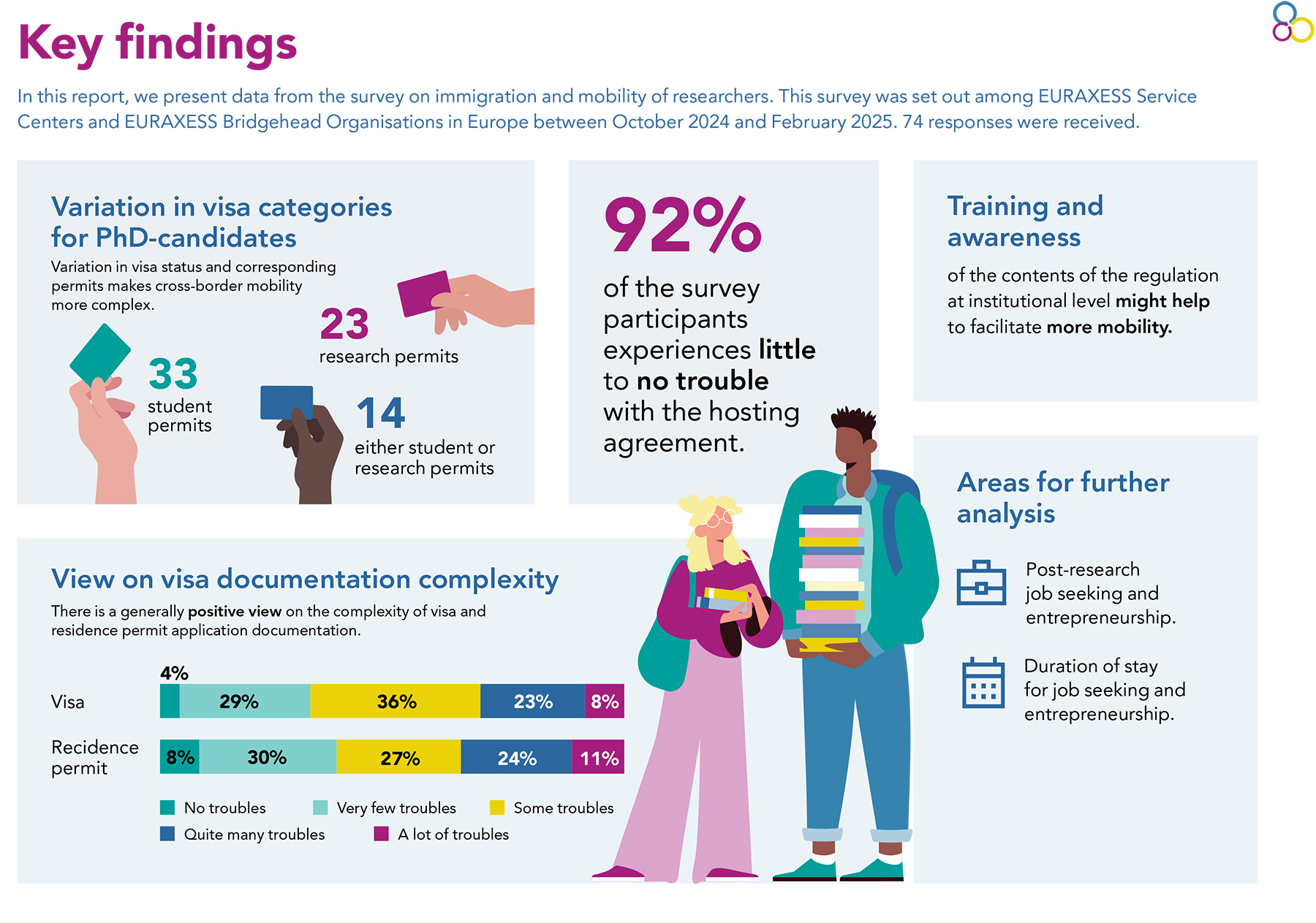


EU countries and countries outside the EU have participated in a survey on immigration and mobility of researchers. Based on the input, the Community of Practice (CoP) Supporting mobility and procedures has published a report with some interesting results. Topics covered include:
- Type of residence permit for a PhD-candidate
- Duration of visa and residence permit granting process
- Complexity of visa and residence permit application documentation
- Processing times for research residence permits
- Hosting agreement process in REST-Directive countries
- Researcher access to the labour market upon arrival in countries with the REST Directive
- Facilitation of intra-EU mobility for researchers on the basis of the REST Directive
- Duration of stay for job seeking and entrepreneurship
- Post-research job seeking entrepreneurship possibilities, hurdles and good practices
- Family members of researchers
- Obtaining the necessary documents, translations and legalisations
Shared recommendations on Attracting talent for Innovation
Earlier this year, the European Commission adopted the first-ever EU Visa Strategy and recommendations on attracting talent for innovation. The CoP was thrilled to see a number of recommendations matching our report. A few recommendations that we recognised and you can also find in our report:
- There should be a shorter decision period on applications for visas and residence permits.
- There should be a shorter waiting time at ambassies for visa applications/collection appointments.
- There should be no more double requests for documents during the visa procedure.